Showing posts with label Underrated movies. Show all posts

Thursday, June 26, 2008


Today's Selection:
Don't Look Now (1973)
http://www.imdb.com/title/tt0069995/

Don't Look Now is a mystery-horror movie (or as the movie bills itself, "a psychic mystery") starring screen powerhouses Julie Christie and Donald Sutherland. Directed by Nicolas Roeg, it depicts the tale of a couple in Venice who are plagued by psychic happenings after the death of their daughter.

It was first released in the UK in 1973, then moved to a limited release in New York on December 9th of the same year. The movie finally received a wide release in January. Box office data for the movie is hard to find, and it's difficult to tell how weird 70s horrors fare in this regard - but its two stars had quite a bit of draw 30 years ago, so I'm willing to believe it did well (at least in the UK if it got a release here). In Hollywood tradition, it is slated for a remake, probably starring Naomi Watts.


What Turned Them Away?

- Forgotten by time. This movie is highly regarded by those who remember it or have seen it, but 1973 was not a prominent year for movies. The Exorcist was by far the highest-profile release of the year, and let's face it - THAT is the horror movie that the world remembers from that time. This actually has the 18th highest amount of IMDB votes from that year, but I think that goes to point out the weakness of 1973 at large versus the clout of this movie. I just don't think I've ever seen it mentioned on this board, and I think that it's very much worth seeing. Hell, I'm surprised I've even seen it.

I guess I don't really feel that this is underrated - just underviewed.

- It's weird. Exceedingly so. I haven't read the source material, a short story by Daphne Du Maurier (whose works seem to turn out uniformly excellent when adapted), but this movie is filled to the rafters with bizarre ****. Psychic phenomena, midgets, Italians, seances, long and un-erotic sex scenes, and a straight razor. In its own special way, the movie is over the top, and subtle at the same time, which I love it for. There's so much to be seen here and all of it is kind of mindblowing. To think people call this movie uneventful!


What Should Have Kept Them?

+ The atmosphere. Don't Look Now's pace is somewhat slow, probably to mask a deceptively thin storyline, but you wouldn't think that for a second as you watched. The look and feel of the movie is utterly absorbing. Nicolas Roeg has created a tonal masterpiece; anything he tries to invoke in the movie succeeds absolutely. It's a fascinating fusion of one of Dario Argento's trashy giallo flicks and some sort of dreamlike alternate reality...a strange combination to be sure, but one that turns out incredible results.

Scenes that probably didn't mean as much in the screenplay are given unbelievable life here. The initial death of the couple's daughter. Julie Christie passing out in the restaurant. A mysterious figure lurking the streets of Venice after dark, a desperate seance, and sad omens aboard a gondola. Scenes like this just jump off the screen, enticing and morbid. It's the kind of movie you dream about.

+ Julie Christie. I'm not a huge Donald Sutherland fan. I think he's cheesy and self-aware. Christie does double-time for him in this movie, though. Watching her in just about anything is a treat, and this movie gives her so much to work with. She is beautiful but fragile, which extends the viewer's connection with her even more; she almost asks to be protected, and it becomes clear through their rocky relationship that Sutherland is not the one to do it. Between the death of her daughter and the promise of seeing and talking to her once again, her character is full of emotions. Christie refrains from melodrama or over-emoting, but she looks perpetually sad. It is an exceptionally intelligent, understated performance, one of the best in horror.

+ The ending. It's intense as hell! So perfectly paced and terrifying (not to mention bizarre), it comes out of absolutely nowhere and smacks you on the side of the head. If the rest of the film isn't all that scary, falling into the trappings of a 35-year-old horror movie, this more than makes up for it. The last ten minutes of the movie are enthralling.

Don't Look Now is probably one of the more appreciated titles I've covered so far, as it's a critical darling and has a small ardent fanbase, but again, I've never seen it mentioned on this board. I think that's a shame - as old horror goes, I almost think it deserves to stand among the greats, were it not for some narrative shortcomings. Anyway, I highly recommend picking this one up and throwing it on on some dark, rainy night.

Tuesday, May 20, 2008

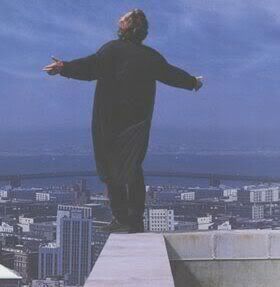
Underrated, Underappreciated Movies, Day 6: Shadow of the Vampire


Today's selection:

Shadow of the Vampire (2000)
http://www.imdb.com/title/tt0189998/

Shadow of the Vampire is director E. Elias Merhige's first major Hollywood project, previously most known for his bizarre cult flick Begotten. Shadow is the tale of German director F.W. Murnau's attempts to film Nosferatu by making a pact with an actual vampire. It first received a 6-theater release on December 29, 2000, and widened to its peak of 513 theaters by January 26, 2001. The film brought in around 11 million dollars overall.


What Turned Them Away?

- No particular genre or marketing hook. As we've seen with movies like Bug and Fearless, movies that do not adhere to one particular genre ("drama" doesn't really count) tend to not perform nearly as well as things like "horror" or "comedy". The closest Shadow of the Vampire comes to a genre is horror, which seems to be the studios' go-to genre for darker movies of no real predisposition. This isn't a scary movie, unless you count the ethereal chill that the atmosphere of the movie gives. It's enthralling, hypnotic and darkly humorous, but not really scary at all.

- People simply don't seem to talk about it. To be fair, this is not really the kind of movie that inspires fervent praise. It is dark, mellow and unconventional; there's no quotable dialogue, no grandstanding machismo...it just exists. This is the kind of movie that sat in the back of the fourth grade classroom and cut centipedes in half with scissors, and then when it got to college it suddenly became really awesome and sexy but still a little creepy. I think people are kind of alienated by that weirdness, enough to skip over the beauty of the imagery or the many other things that it offers. The structure is very free-form, there's little outstanding scriptwork to think about, and a lot of the plot is left up to the viewer's imagination - it's an oddly European movie, and I wonder if people were threatened by that. Either that, or it's simply been forgotten by time, as some great works tend to be.


What Should Have Kept Them?

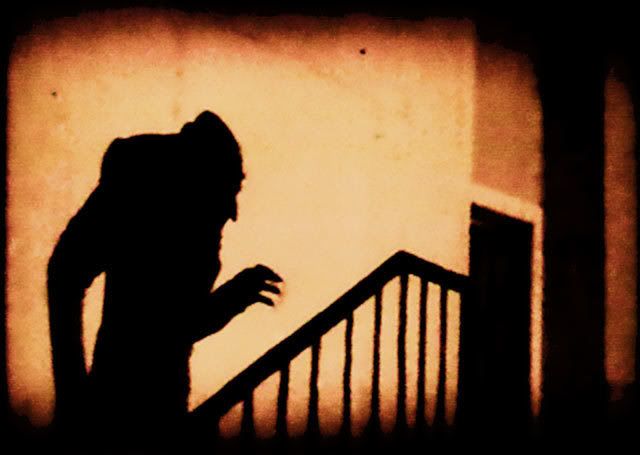
+ Atmosphere. This movie, in terms of composition, is unlike few others. As dumb as this will surely seem, it's like a silent movie with sound - the image is placed at the forefront and what the characters are saying is secondary. Some of the best scenes of the movie come when Murnau is filming his movie and what we are seeing is shown in grainy black-and-white film, interwoven with the "real" scenes in color. I think it's a reminder of some of the things that we take for granted about black and white film...The stimuli are different, sure, but the starkness of the image can make what you're seeing all the more visceral. The first time this technique is used, Murnau is filming the vampire's first appearance, and it is downright chilling to watch him emerge from the shadows.

The movie is very Gothic, not in the meaning of the term that most of us know, but in that it's evocative of crumbling European castles and creatures lurking in the shadows. It successfully captures two tones: that of the original Nosferatu, and something completely new, bleak and haunted and totally beautiful. It seems shallow to praise a movie so heavily for its aesthetic, but Shadow of the Vampire is truly remarkable work.

+ Willem Dafoe. This is the role that really brought Dafoe to the forefront for me. To be honest, I never paid any attention to him in anything else he's been in, even though people claim he's a real acting chameleon and stuff like that. His work in Shadow of the Vampire as Max Schreck, however, is too good to be ignored. It is a truly incredible immersion of an actor into his role, standing well among the work of DDL's much loved Daniel Plainview or any other transformative performance in recent years. Frankly, for him to have lost the Supporting Actor Oscar to Benicio Del Toro's work in Traffic is a travesty; Benny is good, but it was a boring role and he's done far better work in a lot of other movies. Dafoe is unforgettable. He is the only actor to have nailed his accent, for one. Regrettably, a lot of the other accents are God-awful; between this and Mary Reilly, John Malkovich seems unable to do much with his voice.

Dafoe must have watched Nosferatu a hundred times to prepare for this role. He moves like a vampire, looks like a vampire (thanks in part to the awesome makeup), talks like a vampire (a great feat considering Nosferatu didn't have any sound) and acts like a vampire, in more meanings of the term than one. There are so many dimensions to this role: black humor, longing, primal fear, vengeance, theatrics... the character is compelling enough as it is, and Dafoe nails every single one of these aspects effortlessly. You simply forget that it is a person playing this creature.


I think this movie is an acquired taste, and no matter how much I praise it, there are going to be people who it doesn't quite gel with. I don't really have a problem with that; it just depends on what you're watching a movie to see. But if you're looking for something of dark, fundamental beauty, Shadow of the Vampire is tough to beat. And for those concerned, it is only 86 minutes long, so you really don't have much to lose.

(I'm pretty sure that screenshot is actually from Nosferatu, but whatever.)

Saturday, April 5, 2008

Underrated, Underappreciated Movies, Day 5: Land of the Dead


Today's Selection:
Land of the Dead (2005)

http://imdb.com/title/tt0418819/

Land of the Dead is George Romero's return to the zombie films that made him a household name, after a twenty-year sabbatical away from the genre to pursue other projects like Monkey Shines and Bruiser. Released on June 24, 2005, it opened to a respectable 10 million dollar weekend in 2200 theaters and took in 45 million dollars worldwide. Critics received it pretty well too. And yet I see it garner far more hate than it deserves around the Internet. What's the problem here, then?


What Turned Them Away?

- Revisionist zombies. A lot of George Romero/zombie movie fans really dislike Land of the Dead - as far as high-profile zombie movies go, it is by far the most maligned. One of the big reasons, as far as I can see, is the distinct set of changes made to the zombie itself. Previously a non-functional, shambling undead husk, the creature begins to develop a whole new skillset in Land of the Dead...tool use, primitive thought/reasoning, and analytical ability, to name a few. I myself see no problem in George Romero making this type of change to a monster that he single-handedly popularized anyway. Though it may not have been his change to make, who's going to contest him? It's not like it was that blind of a retcon anyway - look at Bud, from Day of the Dead. And further, the plot simply would not have worked with conventional zombies, which I'll get into a bit more later. To me, it seems perfectly natural that a zombie should be able to restore some of its lost processing abilities, but I guess the more hardcore zombie fans felt otherwise.

- Change in genre. This movie is not Dawn of the Dead! Let's face it - there is very, very little room for horror in the zombie genre anymore. They've become more campy than creepy. Romero was perfectly aware of that when he made this movie, and revised it as such. Instead of the conventional horror movies that Night, Dawn and Day were, he produced a gory action movie with a few scary touches and an exponentially high body count. Again, a step in a different direction, which I don't feel should be viewed as a flaw.

- Perceived lack of quality. Okay, so the special effects kind of suck. I can't argue that. It's the price Romero paid for taking a 20-year break from an effects-driven subgenre. But really, is it that huge of a deal? Are people seriously trying this hard to suspend disbelief while watching a zombie movie?


What Should Have Kept Them?

+ Same ol' zombie fun. Even if the movie itself is a lot less dark than Romero's previous forays, Land of the Dead is still an entertaining vehicle for undead carnage. The setting is very new for the genre; it's a post-apocalyptic, almost cyberpunk movie, and there's not much else cooler than zombie dystopia. The conflict, a battle between sequestered rich-man's haven Fiddler's Green and the slums of what's left of the world, may be somewhat predictable, but watching it come to a close is more than satisfying. Fiddler's Green is a near-impenetrable fortress...to the lesser zombies. Their development of intelligence is something that bad old Dennis Hopper never saw coming, and that much-maligned change in the zombie canon was a necessity for the final showdown. Even before the zombie war, the movie is littered with gory, exciting sequences. George Romero really knows his craft.

I'll never understand some of the snobbery over, of all things, zombie movies. In my opinion, it's one of the most harmless and fun genres of films ever. The balance between camp, violence and giddy horror that a good zombie movie reaches is downright blissful; Land of the Dead and its ilk make great movies to watch with friends, maybe after a few drinks.

+ Asia Argento. Okay, maybe not this reason so much as the other one. She's a decent actress at best, but she has ****loads of presence. Whenever she's on screen she's the first character you look at and listen to. This, I think, is partly because she's hot and partly because she's just damn interesting. Look for her in three 2008 movies, all of which sound to be at least entertaining.


I wouldn't call Land of the Dead a perfect movie, but then again it doesn't need to be. The writing's a bit heavy, the CGI is obvious, and of course it's not really a patch on Dawn of the Dead. It does stand on two very strong decayed legs as an excursion into the action-horror-zombie genre, however, and you can't say no to the return of an old master.

Monday, March 17, 2008

Underrated, Underappreciated Movies, Day 4: Fearless (Jeff Bridges)


Today's Selection:
Fearless (1993)

http://imdb.com/title/tt0106881/

Fearless, not to be overshadowed by or mistaken for by Jet Li's "last" movie, is Peter Weir's tenth directorial effort. It's about a man who survives a plane crash and finds himself completely unable to experience fear of any form - physical, emotional, social. A highly positive critical reception didn't mean much to its distributors. Getting a "wide" release of 749 theaters on November 5th, 1993, the movie pulled in a domestic 7 million dollars - scant, but impressive, given its rather small release.


What Turned Them Away?

- Size of release.
Perhaps this is because I wasn't aware of much of anything back in 1993 (I was five years old, bite me), but there's really no reason that this received the crappy little release that it did. 750 theaters? I guess not every movie merits the 1800 theaters that Robocop 3 snuck into that same weekend (http://imdb.com/title/tt0107978/). Or the nearly 2000 that Look Who's Talking Now decided to stink up (http://imdb.com/title/tt0107438/). I know that we bemoan how American movies are dying but let's be honest - things like this have always been popular. Fearless was never meant to be seen by the masses.

- Jeff Bridges's character. The handful of poor dumb bastards who ended up in the wrong theater may have found themselves surprised to see Jeff Bridges playing an emotionally contorted, almost superhuman sociopath, instead of Kirstie Alley or robot explosions. He is a fascinating character, but a rather difficult one to like, and I can't imagine a lot of people giving him that chance. He is really a prick for the first hour or so of the movie; only once he begins his journey to heal himself and another woman is he redeemed. I'm not sure a lot of people made it that far.


What Should Have Kept Them?

+ Jeff Bridges's character.
Max Klein is a man almost completely unique in the world of cinema. Before his accident, he seems to have been a loving father, competent businessman and all-around decent person. After it...he's something totally bizarre. His survival seems to have unlocked something in both his mind and body that completely prevents him from feeling any sort of fear. He screams at people he barely knows just for the hell of it, eats foods he's fatally allergic to with no repercussions, and does whatever he damn well pleases. Some of his actions may come off as unsympathetic or shocking to a viewer, but we have to look at them without our own cultural guards up. The things he does are totally removed from the way society has conditioned him; he is humanity at its root. Selfish.

The movie is largely about Max (and his interactions with another survivor who lost her baby in the accident), and Jeff Bridges does this bizarre figure justice. He sells Max as a sort of Crazy Jesus, alternating between calm and completely irrational. A lot of his actions may seem bizarre, but make almost perfect sense once you re-examine them, and Bridges is a really great guide for this kind of evaluating. You can't NOT watch him, and the movie demands that sort of attention from you - otherwise, the payoff wouldn't work. You wouldn't understand what he does.

+ The direction. Peter Weir gets a lot less attention than he deserves; his bigger, more general (but no less great) Hollywood movies like Witness and Master and Commander are widely-seen, but the smaller ones like this and Picnic at Hanging Rock seem to slip under the radar. His hand is just as steady and masterful in this film as in either of his blockbusters. His choices of visuals are unforgettable, such as a burning cornfield full of wounded, dead, terrified people, and a car slamming full-force into a brick wall in a cloud of broken glass and metal. His use of music is sparing, which makes its appearances all the more remarkable (see below). And the performances he draws out of his actors, like Bridges, Isabella Rossellini, and the Oscar-nominated Rosie Perez, are uniformly stunning. He's a real Renaissance director, talented in many fields and lacking in none.

+ The ending. Without hyperbole, I can safely say this movie has one of the greatest endings of all time. Obviously, elaborating too much would be spoilery, but the confluence of visuals, music, and emotional impact is just enlightening. Absolutely unforgettable.

Fearless, unlike my previous three selections, isn't widely-hated or misunderstood. It's simply great, which a lot of people have yet to recognize. You really owe it to yourself to watch this movie, no matter who you are or what genres you're interested in. If you can bring yourself to accept the initially dubious decisions that Jeff Bridges makes, you will be paid off with a moving, scintillating, dynamic parable.

Saturday, March 1, 2008

Underrated, Underappreciated Movies, Day 3: Buffy the Vampire Slayer


Today's Pick:
Buffy the Vampire Slayer (1992)

http://imdb.com/title/tt0103893

Buffy the Vampire Slayer, the movie predecessor to Joss Whedon's smash hit television series, was also his first major writing credit (aside from a few episodes of Roseanne, but who cares about that show). It got critically reviled and publicly ignored, holding a 30% on Rottentomatoes and a 5.3 overall rating on IMDB, and pulled down a 16 million dollar theatrical run.


What Turned Them Away?

- Uh...the whole thing. Honestly, this movie is kind of a mess, and it would be a challenge for me to convince you otherwise. It's basically Heathers with vampires, and though it doesn't speak much for its originality, just try and tell me that that isn't a winning formula in and of itself. The movie never quite lives up to its premise, though, What it ends up being is a sanitized, theater-friendly packaging of healthy girl power and unselfish altruism coming from people you'd never expect it from. These very serious themes end up clashing with the first hour of the movie, which is a bizarre mixture of fluffy Valley Girl comedy and bizarre satire.


What Should Have Kept Them?

+ It may be a mess, but it's a very watchable one. I seriously can't imagine anyone sitting through this movie without cracking a smile or laughing, whether it's from the humiliating way the movie has aged or one of the movie's legitimately amusing moments. Donald Sutherland is taking himself entirely too seriously (of course), but it's all comically dispelled when Buffy asks him if he has any gum during a long huffy monologue about evil powers. And watching Buffy surreptitiously look for her first vampire to kill while walking through a dark alley and singing "Feelings" is one of the most surreal, amusing moments I've had in a while.

And even if you don't find these kinds of things funny, the movie is simply bad enough to enjoy in the MST3K style. Where most bad movies generally take themselves too seriously to torment, and most "camp" movies do it to themselves to the point where it actually gets tiresome, Buffy strikes the perfect balance. I really think there's something in this movie to please everyone, if they're willing to buck up and give it a shot.

+ The evolution of Joss Whedon. For those who are fans of any of Joss Whedon's other efforts, it's interesting to see where the master got his start - from some twisted rendition of anti-undead feminism to writing ratings gold (or in the case of Firefly, quickly-canceled but well-loved gold). And though I'm sure the studio nerfed it all to hell, there are glimmers of Whedon's trademark cleverness scattered throughout the movie. In the hands of anyone else, this would have been unwatchable on any level.

I classify Buffy the Vampire Slayer as underappreciated because I think people took it way too seriously, as they still seem to. Maybe it had been billed as a legitimate action/comedy flick 15 years ago - I wouldn't know - but in this day and age, it best serves its purpose as a laughable/laughably bad excursion into...vampire comedy? Yeah. I make no promises with this one but I'm sure some of you could find it in your heart to give it a shot.

Saturday, February 23, 2008

Underrated, Underappreciated Movies, Day 2: Bug


Today's Pick:
Bug (2006)

http://imdb.com/title/tt0470705/

Bug is an adaptation of Tracy Letts's well-loved play of the same name. It debuted at Cannes in May 2006 and received a release in over 1500 American theaters a year later. Thrown into the fray with Pirates 3, Shrek 3 and Spiderman 3 still in theaters, it managed to pull down an opening weekend of 4 million dollars but plummeted significantly after that. Word of mouth and middling critical reception seems to have sunk the film. Why? Let's find out.


What Turned Them Away?

- The marketing. This is by far the biggest reason for the film's chilly reception. You first have to understand that Bug is a ****ing weird film. Marketers design their campaigns around broad genres: adventure, romance, drama, horror. Bug doesn't fit into any of these conventional categories, so Lions Gate decided to stick it into what seemed to work best: horror. If Americans were more tolerant of the "horrifying dramatic black-comedy paranoid love story" genre, Bug may have found a great deal more success, but alas, it was not meant to be.

- The movie itself. Once the marketing got asses into seats, people were alarmed to discover that they were not watching a horror movie. What they saw was half an hour of talky drama, followed by a few weird things that escalated into a bizarre, twisted fever dream of a movie. Certainly not your average summer fare, and with the 60% revenue dropoff from one weekend to another, highly unappreciated. This film is as far out of the box as you get. Bug sees the box, screams and flies away.

- It WAS a play. Ready for the shocker of the century? Plays tend to thrive on their dialogue. Bug is very, very dialogue-heavy, which is dangerous for any film to pull off. You have to give yourself completely to the actors and suspend all disbelief, and it gets especially difficult in this movie. To be fair, I do think it is one of the movie's faults - it really would have benefited from a more radical adaptation from the play.


What Should Have Kept Them?

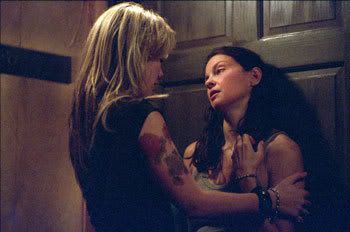
+ It's unique. As I mentioned before, this went up against a handful of blockbuster threequels and got absolutely destroyed. It's a pretty telling statement for the rewards that originality receives in American media when three derivative formula movies gross a small nation's worth of profit and Bug can't even pull down five million. If I had to invent a genre in as few words as possible for Bug, it would be "absurdist psychological horror". You simply can't do it justice with anything less. It develops two compelling, tormented characters and sends them straight to Hell. Like recent darling There Will Be Blood, there are plenty of humorous moments interlaced with absolutely horrifying ones; it's as if the movie is challenging you to laugh at its insanity. Ashley Judd screaming "I am the super mother bug!!!" in the middle of a heated monologue about governmental conspiracy is about as bizarre as you can get, and surely is an unforgettable moment in the midst of a bunch of forgettable movies.

+ It's powerful. Bug is only a "horror" movie in that some truly unspeakable things happen to the characters we see. The movie allots time to let these people build: Agnes White, bereaved mother and on the run from her terrifying ex-husband, and off-kilter war veteran Peter Evans. Agnes is going through a difficult time emotionally, after the disappearance of her son and her husband's release from prison, and she finds emotional solace in Peter's presence. Sadly, Peter's not all there, convinced that the government is planting "bugs" in him; before you know it, he's got her on a psychological rollercoaster. Agnes is clearly a good, if troubled, person and the things she sees in her exposed state sting us by proxy. One scene, for instance, involves the removal of a bug's "egg sac" and is absolutely terrifying. It is filmed in cold, lengthy shots, not giving the viewer a chance to rest as we watch the painful process. There are never any "safe points" in the movie, riding a steadily mounting wave of fear to the several scary climaxes.

+ Ashley Judd. Who the hell knew she could act? And act she does in Bug; in fact, she acts incredibly well. It is certainly one of the strongest performances of the 2007 movie year, one that she was never going to be honored for but may have deserved it in some alternate world. Agnes White is the crux of the movie; it gives you a half hour to buy into her plight and understand why she so willingly buys into Peter's lunatic ravings. She represents the last bastion of rationale in the twisted chain of events that unfolds, and Judd plays her part with a tempered, wary sort of delusion. She gives off the impression that though she is externally agreeing to whatever she's told, there's some part left of her that simply can't buy into it all - a superb feat from an actress who hasn't been able to prove herself quite like this before.

Bug is a movie that you have to come into with a very open mind. If you expect typical horror tropes, you're going to be deeply disappointed. Allow the movie to be what it is, and you may find yourself shocked, disturbed and perhaps even entertained in a sick sort of way. As I said before, its play roots cause it to be a little long in the tooth in some spots, but a majority of the dialogue is riveting and clever. Bug is truly one of 2007's most underrated pictures.

Thursday, February 21, 2008

Underrated, Underappreciated Movies, Day 1: Marie Antoinette


Welcome to the first post in what will (hopefully) be a series of underrated, underseen, underloved movies. I don't expect to change everyone's mind about the films I want to cover, but hopefully I can offer a new perspective on some of them. These are the kinds of movies that got unfairly dismissed for whatever reason and deserve another shot.

Marie Antoinette (2006)

http://imdb.com/title/tt0422720/

Marie Antoinette is the third film by daughter-director Sofia Coppola, and it is also her most ill-received. It started out inauspiciously when a few people at Cannes perceived it as "historically inaccurate" and booed it, which degenerated into sensationalized stories of crowd-wide hatred. The movie kind of snowballed from there until it finally hit the States, where it opened to a flimsy domestic box-office and mixed critical reception.


What Turned Them Away?

- The plot, or lack thereof. Marie Antoinette, as its title kind of obviously suggests, is a historical character study. (More on that later.) The film is very different in its narrative construction - Marie has no real character arc to speak of. The story is a collection of fragments from her personal life, touching on the highlights like her famed bitch fight with a royal prostitute and her sordid love affairs. It isn't really a movie in that way - it's like a chaptered retrospective of a tragic, naive figure. People claim it's style over substance, but it couldn't be farther from the truth. There is plenty of substance, but it's subtle, and the style masterfully expounds on that substance anyway.

- You don't get to see her beheaded. I'm sure a lot of people would have loved to see Kirsten Dunst's decapitated head rolling around the gallows of France, but Sofia Coppola's decision to leave it to the viewer had a lot of bloodthirsty viewers pissed off.

- Sofia Coppola herself. A lot of people thought she fucked up the third installment of the Godfather series. I mean, sure, she can't act, but why hold that against her in her behind-the-camera pursuits? The backlash grew especially venomous when Lost in Translation found critical and commercial success - people began to cry nepotism. The ill will was bound to explode at some time...


What Should Have Kept Them?

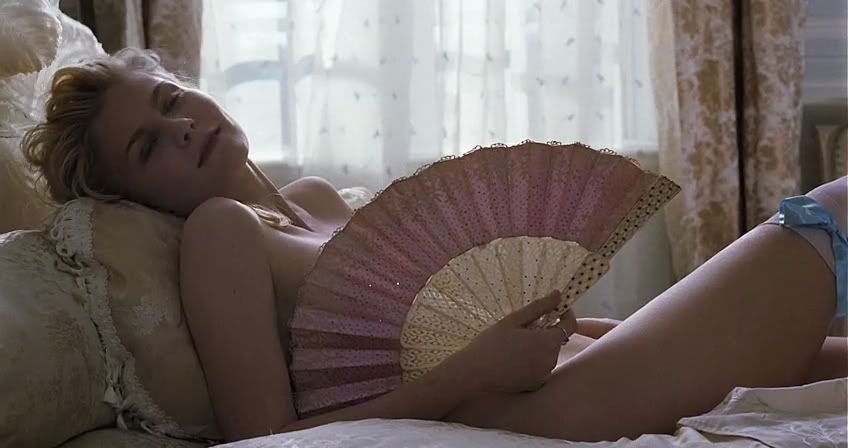
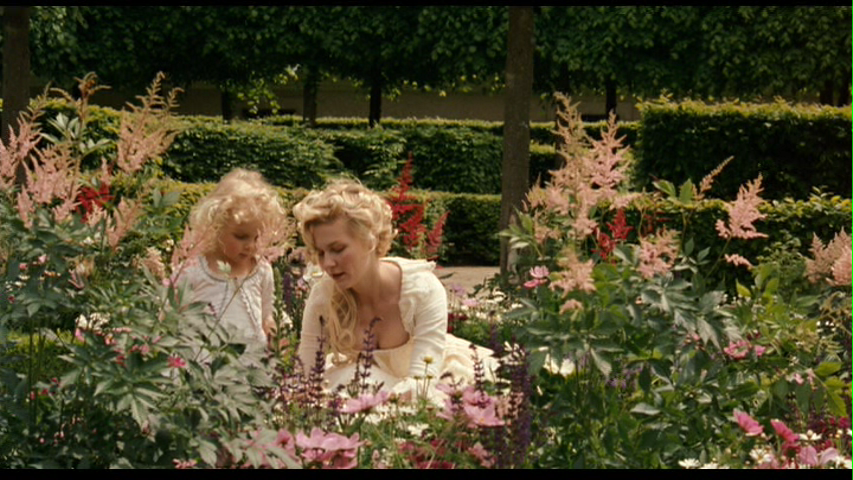
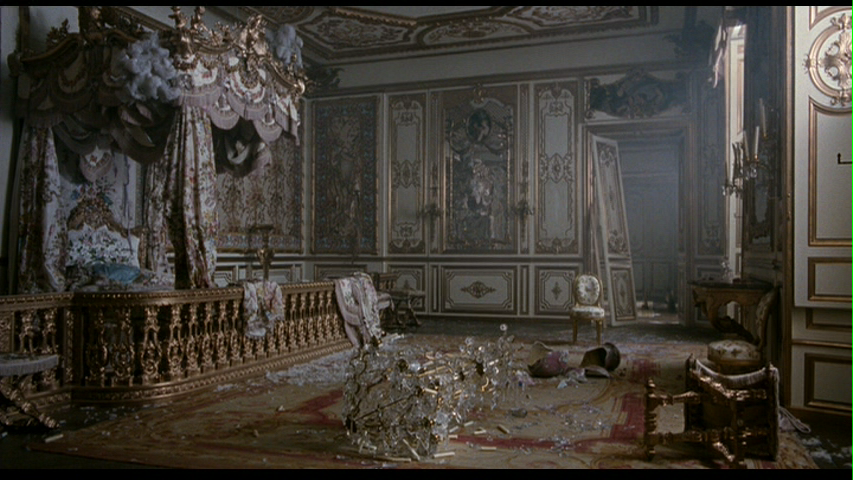
+ The visuals. Say what you will about her storytelling abilities, but it's undeniable that Sofia Coppola has inherited her father's talent for putting a stunning image on film. Between the lavishly-designed costumes, the flawless cinematography and the meticulous set design - surely aided by the fact that it was filmed in Versailles - Marie Antoinette is the kind of movie that leaves indelible images burned into your brain.


+ The sound. Some might not care for Coppola's jangly indie-rock "nouvelle vague" sensibilities, but there's a lot more to be appreciated on her soundtrack. She skillfully juxtaposes not only modern tunes against the historical backdrops of her film, but also makes sure to include several classical pieces as well. Between this and the distinct visual style, Marie Antoinette is a totally unique movie. If the vocal tunes aren't your thing, the instrumentals she selects are fantastic - haunting, simple tunes that fit the mood perfectly. People might like the movie's OST for The Cure and Bow Wow Wow, but Aphex Twin, Squarepusher and Dustin O'Halloran's contributions to her score are the real standouts.

+ The character. As I briefly touched upon above, Marie Antoinette was a character of great complexity. The movie doesn't hit all of the points of her tragic life, but few movies could without being four hours long. What it instead offers is scenes, vignettes that tell us as much about the queen as possible in the two hour run time. She wasn't malicious in the slightest, but simply a sheltered teenager placed in a position of incredible power. What 16-year-old is expected to know how to rule a country? Of course she was bound to make mistakes - she is, after all, a teenager. And when she begins to have emotional problems, such as her unconsummated marriage and the political outcries of her foes, she uses luxury to bury them just as anyone her age would. In fixing the focus on Marie, rather than the political turmoil of the country, Sofia Coppola manages to keep the character sympathetic while highlighting her flaws and mistakes at the same time.

I wouldn't call Marie Antoinette a perfect movie. I think it's slow to get off the ground - the first twenty minutes aren't easy to sit through. But the rest is gravy...beautiful, sumptuous gravy. It's a tale of inherent contrast: the vagaries of a teenage girl tempered by an oppressive, dangerous governmental climate. For my money, that's the kind of contrast that creates substance, and doesn't deserve to be ignored.